Why Court Reporting Is Necessary for Accurate Legal Paperwork
Court coverage plays a vital function in the legal system. It gives an accurate, verbatim record of court procedures. This accuracy is important for preserving the integrity of lawful procedures. Errors in paperwork can cause substantial consequences for case outcomes. As lawyers increasingly depend on these records, recognizing the nuances of court coverage comes to be necessary. What elements add to the performance of this practice in making certain justice?

The Function of Court Reporters in the Legal System
Court press reporters work as the essential link between talked testimony and created document in the lawful system. They are in charge of recording verbatim accounts of court proceedings, guaranteeing that every word spoken is properly transcribed. This transcription comes to be a main document, necessary for allures, legal research study, and keeping the honesty of judicial procedures. Court reporters use specific tools and strategies, such as stenography, to facilitate this precise paperwork. Their function extends beyond mere transcription; they have to comprehend lawful terms and court room treatments to ensure clarity and context in their records. Furthermore, court press reporters keep privacy and impartiality, adding to the general fairness of the lawful procedure. Their work is essential for judges, lawyers, and parties included in lawsuits, as it provides a trustworthy account of process that can be referenced in future lawful actions. Via their competence, court press reporters promote the standards of justice within the legal system.
Guaranteeing Precision in Legal Records
Keeping precision in lawful transcripts is paramount to the stability of judicial process. Court reporters play a critical function in capturing every talked word during tests, depositions, and various other lawful settings. Their expertise in stenography and familiarity with legal terms guarantee that transcripts mirror the exact discussion and subtleties of the case. Any type of mistakes or omissions can result in misinterpretations, which might detrimentally affect the results of legal conflicts.
To accomplish this degree of precision, court reporters use sophisticated modern technology and rigorous training to improve their transcription abilities. They likewise participate in extensive testimonial processes, cross-checking their job for accuracy before settling files. On top of that, guaranteeing proper context and speaker identification adds an additional layer of dependability to the records. Eventually, accurate lawful records work as foundational documents that promote the justice system, enabling all parties entailed to depend on a precise record of proceedings.
The Value of Real-Time Coverage
Real-time reporting has emerged as a substantial improvement in the area of court reporting, boosting the efficiency and access of lawful proceedings. This technology permits court reporters to record spoken dialogue instantly, giving prompt access to transcripts for attorneys, courts, and various other legal workers. With real-time reporting, participants can quickly assess statements and arguments, assisting in even more enlightened decision-making during proceedings.
In addition, this capability is specifically beneficial in complex situations where quick understanding of info is essential. It promotes clearer communication amongst all celebrations, lowering the possibility of misunderstandings. Additionally, real-time transcripts can be shared from another location, benefiting those not able to attend personally, thereby widening access to justice. As lawful atmospheres come to be progressively vibrant, the function of real-time reporting in making certain accurate and timely info circulation can not be overemphasized, making it an indispensable device in modern court reporting techniques
Lawful Documents and Its Influence On Case Outcomes
Reliable lawful documents plays a crucial function in forming situation end results, because it functions as the foundation whereupon legal disagreements are developed. Precise documents guarantee that all essential realities, testament, and evidence are clearly presented, permitting lawyers to create compelling cases. Mistakes or omissions in documents can cause misinterpretations, which might detrimentally impact the court's choice.
Efficient paperwork assists in effective instance management, making it possible for lawyers to rapidly reference important details throughout process. Juries and juries depend greatly on documented proof to comprehend the context and subtleties of an instance. The top quality of legal documentation straight affects the integrity of debates presented in court.
Eventually, accurate and detailed lawful documentation not just enhances the possibilities of positive results however additionally upholds the stability of the lawful process, guaranteeing that justice is offered precisely and fairly.
Innovations in Court Coverage Technology
As technology remains to develop, innovations in court coverage have substantially transformed just how legal paperwork is generated and handled. Advancements such as real-time transcription software enable why not try this out court press reporters to deliver immediate access to records, boosting the effectiveness of legal proceedings. Digital recording systems have also emerged, giving a reliable backup to conventional approaches, while man-made intelligence is increasingly being incorporated right into the paperwork procedure, improving accuracy and minimizing human mistake.
Additionally, cloud-based systems facilitate safe sharing and storage of court documents, ensuring that legal groups can access needed files from anywhere. Remote court reporting has ended up being commonplace, enabling lawful experts to take part in proceedings regardless of geographical great site area. These technological innovations not just enhance the court reporting process yet also enhance the total integrity of legal documents. As an outcome, the lawful field is better furnished to fulfill the demands of contemporary litigation, making sure that justice is served efficiently and properly.
Frequently Asked Questions
What Credentials Do Court Reporters Normally Need?
Court reporters typically need a senior high school diploma, specialized training in court reporting, and efficiency in shorthand or voice writing. Accreditation and licensure demands differ by state, boosting their reputation and ensuring professional criteria are met.
How Do Court Reporters Maintain Privacy?
Court press reporters preserve confidentiality by adhering to rigorous honest standards, using protected techniques for saving and transferring transcripts, and making certain delicate details is shared only with authorized people involved in the legal proceedings.
Can Court Reporters Work in Other Settings Besides Courts?
Stenotype reporter can without a doubt function in various settings beyond courts, including depositions, service conferences, and legal settings up. Their skills in capturing talked language accurately make them important in any atmosphere needing specific documents.
What Is the Average Income of a Stenotype Reporter?
The typical income of a stenotype reporter varies widely, normally varying from $50,000 to $100,000 annually, depending upon variables such as experience, area, and the particular industry in which they are used. (durham court reporting)
Just how Lengthy Does It Require To Become a Certified Court Reporter?
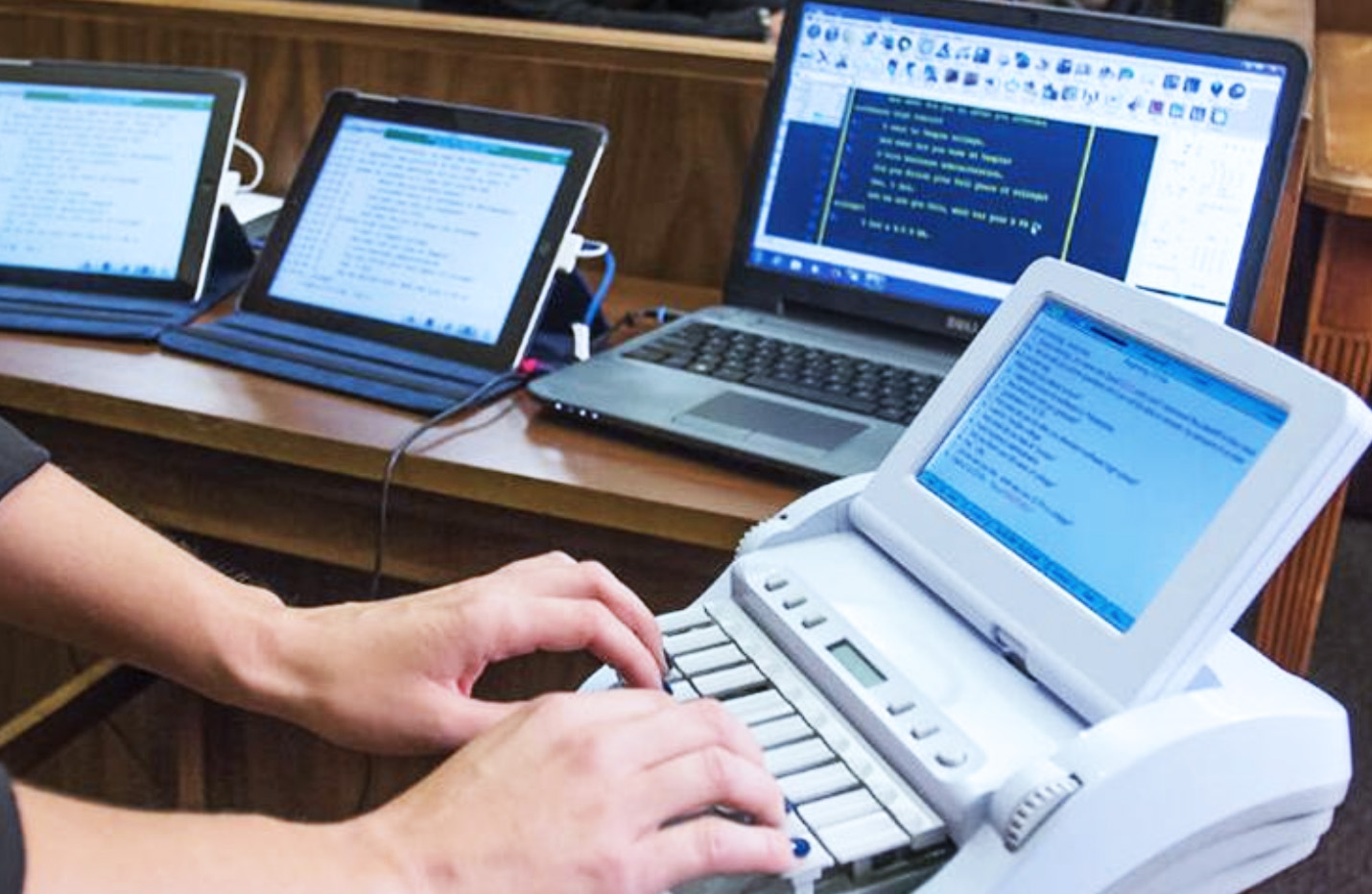
Court press reporters offer as the important web link in between talked statement and composed document in the lawful system. In addition, court press reporters preserve privacy and read impartiality, adding to the overall fairness of the lawful process. Innovations such as real-time transcription software application permit court press reporters to provide instant accessibility to records, enhancing the efficiency of legal proceedings. Court press reporters commonly require a high college diploma, specialized training in court reporting, and proficiency in shorthand or voice writing. Court press reporters can certainly function in different settings beyond courts, including depositions, business meetings, and legislative settings up.